



About the Game
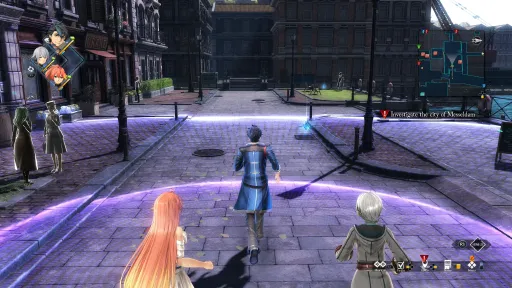
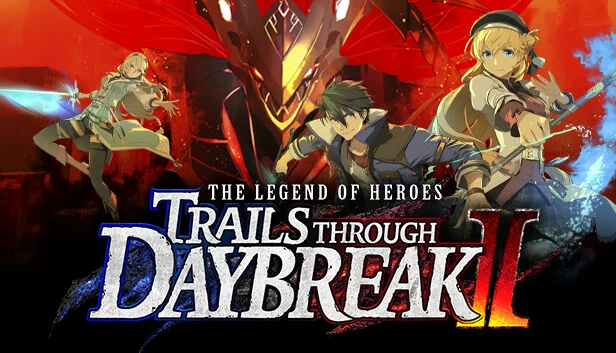
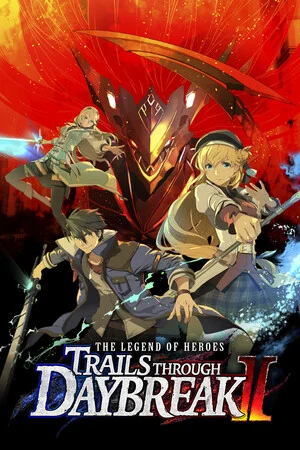
No longer threatened by the mafia organization Almata, the people of Calvard have returned to their peaceful lives. But one day, a shocking series of murders involving a mysterious crimson beast sets the wheels of fate in motion once again. Various factions spring into action – both those who abide by the law to uncover the truth and those looking to capitalize on any new developments wherever possible, no matter how sinister.
STORY
Year 1209 of the Septian Calendar.
The threat posed by Almata has passed. Peace has finally returned to Calvard. And, for a time, that peace goes uninterrupted—until a CID special forces unit is slaughtered by an unknown assailant.
With authorities working to contain the situation, criminal forces take the chance to make their own moves.
Meanwhile, a spriggan by the name of Van Arkride begins his own investigation—after prompting from an unexpected visitor.
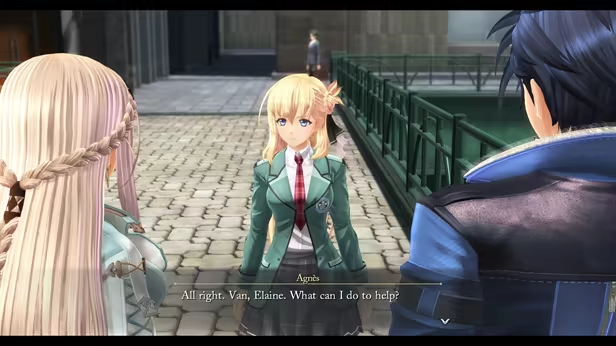
Who could be responsible for this massacre? What was their objective? And how does it all relate to Agnès' search for the eighth Genesis?
SYSTEM
Battle System
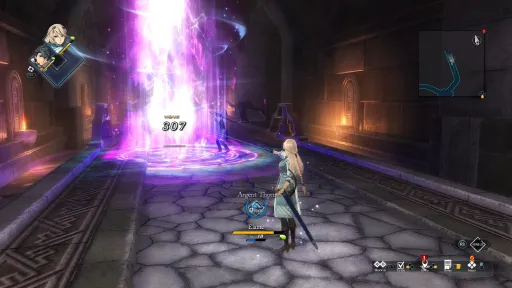
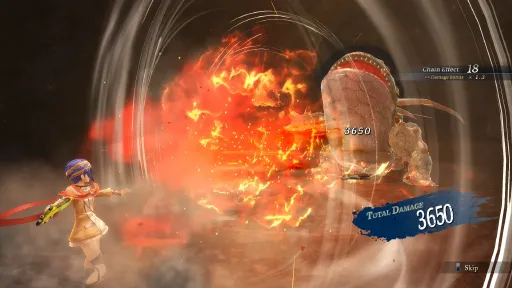
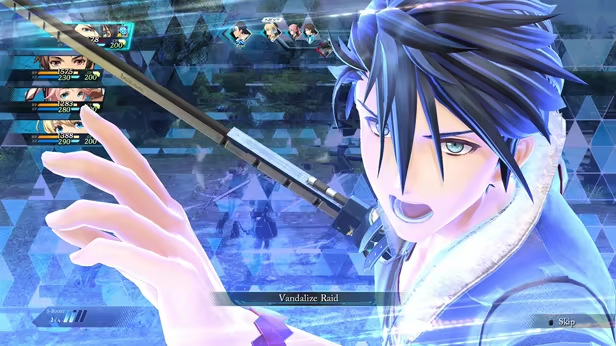
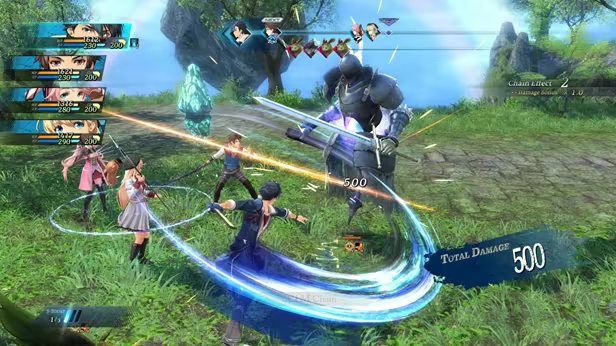
The game builds on the seamless transition between field battles and command battles introduced in the previous game with new mechanics that can be used in both: Cross Charge & EX Chains! Mastering the use of these two combo mechanics can provide you with overwhelming firepower to use against your opponents.
Cross Charge
If you manage to Perfect Dodge an enemy's attack during a field battle, the Cross Charge icon will appear! Pushing the correct button while the icon is on-screen will swap in another party member, who will simultaneously execute a charge attack on your foe! As a bonus, the party member that you swap in will have enhanced attack power for a period of time.
EX Chains
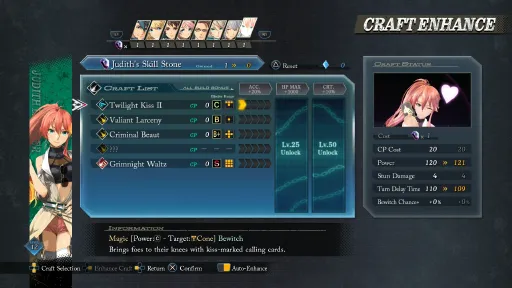
EX Chains can be activated by fulfilling specific conditions during command battles. Once these conditions have been met, using a craft or normal attack against a stunned enemy will automatically activate an EX Chain! This allows party members with SCLM activated to launch a simultaneous attack that will also impact nearby enemies, dealing massive damage.
Choose Your Chapters
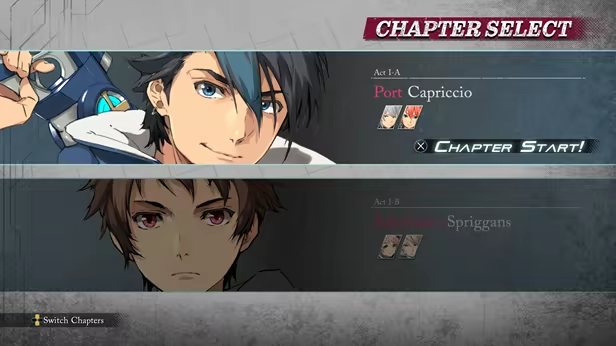
Once you've completed your chosen chapter, the next one will start up automatically.
Unique Missions
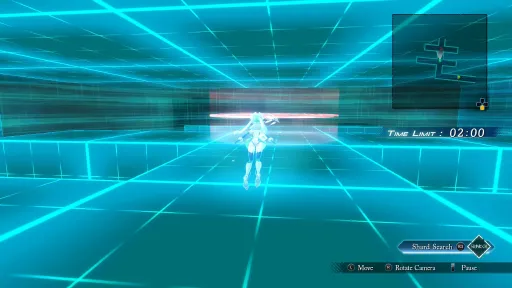
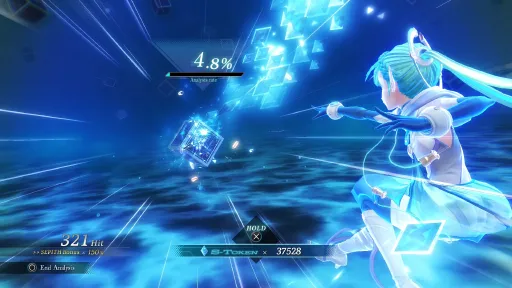
Certain chapters will feature missions that utilize the unique skillsets of the characters in that chapter's party. For example, directly controlling the holo core AI, Mare, to hack the orbal network, or using Swin to silently tail a suspicious individual.
CHARACTERS
Van Arkride
The man at the head of Arkride Solutions. A lover of sweets, saunas, and orbal cars. Due to his job as a spriggan, Van has a tendency to take on legally-questionable jobs. However, the fact that he occasionally walks on the edge of the law does not preclude him from doing good by others—as is evidenced by his numerous personal contacts. While tracking down the Oct-Geneses at Agnès' request, Van developed the ability to transform into an armored form known as the Grendel with the help of Mare, the holo core installed within his combat orbment. It was with this new ability that he was able to fend off the mafia group known as Almata. Having once terrorized the entirety of the Republic, Almata was eventually brought to its knees by the Arkride Solutions team during the fight for the Oct-Geneses. Upon the quelling of this threat, however, they decided to temporarily go their separate ways. Now left to himself in a less-than- lively office, Van is free to return to his lone-wolf lifestyle once more.
Agnès Claudel
A first-year at the prestigious Aramis Academy who currently serves on its Student Council. Despite her polite manner of speaking and at times meek demeanor, Agnès has shown great strength and determination while employed at Arkride Solutions—especially when facing off against the seedy underbelly of society. Agnès first met Van while searching for eight prototype orbments known as the Oct-Geneses, which she inherited from her great-grandfather. As thanks for taking on her request, she began working as one of Arkride Solution's part-time assistants. At present, Agnès has recovered seven of the eight Geneses. Unfortunately, while continuing her search for the last remaining Genesis, she's had no choice but to also divide her time between preparing for the Aramis Academy Festival and periodically helping out around Arkride Solutions. Regarding her relationship with Van, she both respects and admires him as her employer. However, she seems to be harboring some more amorous feelings for him as well...
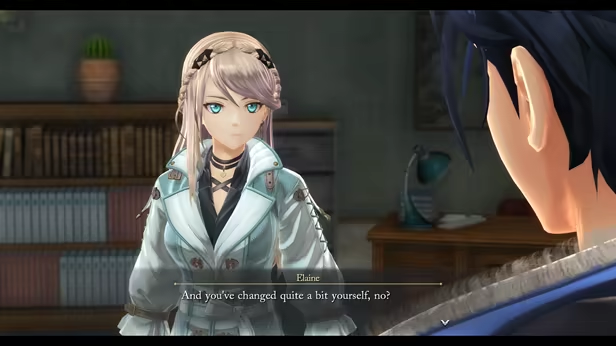
Elaine Auclair
WORLD
The Republic of Calvard
A large country located in the central region of the Zemurian continent. Its current leader is President Roy Gramheart. Due to the unfortunate circumstances created by the desertification of eastern Zemuria, Calvard has a substantial history of receiving both immigrants and refugees. The resulting mixture of cultures and ethnicities has made the country into something of a melting pot. One hundred years ago, Calvard was under the heel of its monarchal rulers. It was only after Sheena Dirke and her compatriots brought about a democratic revolution that the nation was transformed into a democratic republic. Though in constant conflict with Erebonia over the control of bordering regions, Calvard has recently been on the receiving end of reparations from the empire following the Battle of Jormungandr. These reparations enabled Calvard to enter a period of rapid growth and development, leading to its eventual overtake of Erebonia as the most powerful nation on the continent. Regarding the region's recreational interests, recent technological advancements in orbal vehicles and filmmaking have caused a boom in both the motorsports and orbal cinema industries.
Messeldam
A moderate-sized city located in the north of Calvard. Due to its long-standing role as one of the Northern Sea’s major trading ports, Messeldam was often tasked during the days of monarchal rule with the delivery of imports to the capital of Oración—along with fresh seafood, of course. Although the port remains active to this day, developments in airship technology have greatly diminished its significance. The city itself, however, remains an important gateway to Remiferia and its surrounding nations. Unlike Langport, Messeldam possesses very few tourist destinations. That being said, the townscape's architecture tends to be quite popular with visitors, as its design has seen little change in the past century. The city’s Eastern and Central Eastern populations are fairly meager due to its geographical location. As such, it lacks a community that values cultural traditionalism. This has, fortunately, been a boon for Messeldam, as new art movements and customs are accepted with relative ease. It was this very attitude that led to the city serving as the venue for the Orbal Film Festival for a number of years, until its relocation to Tharbad in 1208.
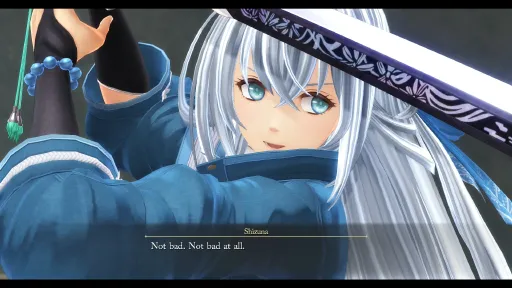
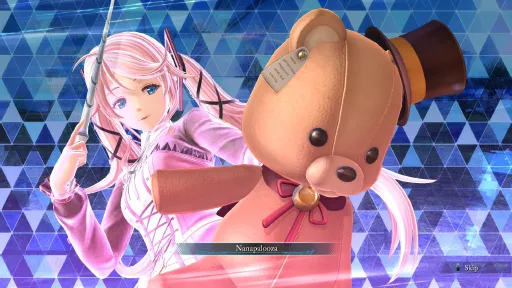
Screenshots
10 images
Version Information
Steam Patch Notes
Official update history
Hi everyone,
today we are releasing a minor update for Trails through Daybreak II.
This patch includes the following changes:
Integrate a variety of localization improvements and fixes
Slightly improve GPU-bound performance on Intel GPUs when using XeSS
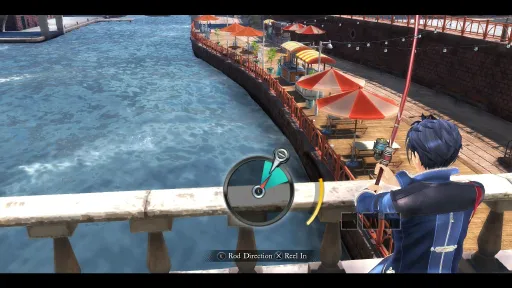
Fix wrong button prompts being displayed in the fishing bait item description
Fix minimap icons disappearing in some circumstances
Apply the light distance setting to spot lights as well (it erroneously applied only to all other, more common, light types before)
Make the "Ultra" SSR setting behave as intended in all circumstances (previously, it would not actually apply the intended quality after a game restart)
As always, if you want to revert to the previous version for any reason, you can do so using the Steam "Beta" feature.
Cheers,
Peter "Durante" Thoman, CTO, PH3
in the patch notes for the previous major update which introduced DLSS, we noted that we would like to support other upscaling technologies (such as XeSS and FSR) as well, but that they do not offer DirectX 11 support. Amusingly, on the same day, Intel released XeSS 2 with DX11 support.
As such, this version introduces support for Intel XeSS upscaling on supported Intel GPUs (see Intel's XeSS web page for detailed information on supported hardware).
Here's the full list of changes and improvements:
- Introduce Intel XeSS SR support.
- Fix an issue where the delay for active voice dialogue lines might be inappropriate for some audio/text language combinations.
- Improve out-of-the-box performance on dedicated Intel GPUs and integrated AMD GPUs by providing a more fine-grained automatic configuration of host write buffering behaviour.
I hope you enjoy this update. As always, in the unexpected case that you run into any regressions, you can revert to a previous versions of the game by using the Steam "Beta" feature.
Cheers,
Peter "Durante" Thoman, CTO, PH3
I'm very happy to announce that with today's update, we are introducing Temporal Anti-Aliasing and NVIDIA DLSS support for Trails through Daybreak II. If you are interested in more detailed technical information about this, then stick around for the final part of this post, but first, let's go over the patch notes and some (potential) FAQs.
{STEAM_CLAN_IMAGE}/45091937/66f1a15e8a2148726b46ede4153ad3198e6225b2.jpg
Here's the full list of changes and improvements:
- Introduce a TAA anti-aliasing option.
- Introduce DLSS3 and DLSS4 graphics options for compatible hardware.
- Always render 3D UI at 100% scale, even if the render scale is below 100%.
- Always render expanded minimap UI at 100% scale, even if the render scale is below 100%.
- Always render the time chart illustration UI at least at 100% scale, even if the render scale is below 100%.
- Load the default graphics preset on game start if no settings file is present, and adjust the preset logic to use DLSS on compatible systems.
- Fix the behaviour of the "Camera Auto Center" and "Slope Adjust" options.
- Fix the potential temporary loss of background blur in the settings menu upon changing some graphics settings.
- Prevent mouse scrolling on the Cube Analysis result screen from wrapping around the list in a surprising way.
- Prevent specific soft-locks which could occur when having a direct shortcut action binding which conflicts with another action.
- Fix an issue with loading the latest save on startup when all 225 save slots are used.
Rendering the various types of UI at least at 100% scale also applies to simple (non-DLSS) scaling, but is particularly useful in conjunction with DLSS as this makes lower render scales more viable.
TAA/DLSS Integration FAQ
Why is the performance impact of enabling TAA/DLSS slightly higher than in some other games?
Most current rendering engines always generate motion vectors, e.g. to use them for effects like object motion blur. This is not the case for Trails through Daybreak II, which means that motion vectors are only rendered when TAA or DLSS are enabled, with a slight performance cost. Of course, DLSS still allows for much more significant rendering performance savings by using a sub-100 render scale at very good output quality, and TAA provides much better performance than the more expensive AA options like MSAA or SGSSAA.
What is the difference between the "DLSS 3" and "DLSS 4" settings?
The former setting uses the traditional CNN AI model, while the latter uses the new transformer-based model for spatial upscaling. This provides improved image quality in most situations, at slightly higher performance cost.
{STEAM_CLAN_IMAGE}/45091937/3a25da46e59082623c7ac6e34a94249330b58fee.png
Where are the DLSS quality settings?
To adjust the DLSS quality, just adjust the existing render scale setting. For example, "50" render scale is "Performance DLSS", and 100 render scale is "DLAA". You can actually go above 100 in our implementation, which is a bit silly and which I don't think NVIDIA has a name for.
For example, the settings in the screenshot above would be using the DLSS transformer model with a scale close to the usual DLSS "Quality" preset.
Why only DLSS? What about FSR or XeSS?
Given that the majority of the work for integrating DLSS into this game went into creating reliable motion vectors for all scenes, we'd absolutely love to support all technologies that can make use of this. Sadly, neither AMD FSR nor Intel XeSS support the DirectX 11 API used by Trails through Daybreak II, while DLSS does. If a future release of either of the other temporal upscaling solutions adds DX11 support, we would certainly aim to integrate them as soon as possible.
This is also the reason why I implemented TAA, so that anyone on a non-Nvidia GPU can at least benefit from this update in this way.
Technical Background
As alluded to in the FAQ above, the major challenge with integrating TAA and DLSS into this game was that it does not naturally generate per-pixel motion vectors. "Motion vectors", in this context, are simply a vector of two numbers for each pixel on screen which indicates where this pixel was on the previous frame -- e.g. a motion vector of (20,5) would indicate that the object this pixel belongs to moved 20 pixels to the right and 5 pixels down in the current frame.
The quality of the motion vectors supplied is crucial for the final output quality of the result that DLSS (and other comparable technologies like FSR and XeSS) can produce, as it enables them to use information from previous frames not just for stationary objects, but also for those that are in motion.
While integrating DLSS into a game which already generates motion vectors and uses some form of TAA might take just a matter of hours and potentially be completed in a working day or two, adding motion vector generation in a game and engine from scratch is a more involved process. For example, any bone-animated mesh (such as a character model) needs to be supplied with the previous frame's poses in order to compute both the previous and current vertex position, and finally deduce pixel movement from these. Other objects which require special handling for motion vectors are things like grass and foliage that sways in the wind.
{STEAM_CLAN_IMAGE}/45091937/37280de30e74b78e8932bb1d153703964f1c5cf5.jpg
Even with accurate motion vectors, there are some specific patterns which don't work well with DLSS. An example is the starry sky shown in the screenshot above, where stars are rendered as single-pixel dots (you probably need to look at the full-size image to see them). To support situations like this, a special mask can be provided to DLSS which marks areas where recent changes should have priority. We also provide this for that particular purpose. (Note that, in our testing, it seems like DLSS 4 / the transformer model currently ignores this input).
After finishing work on DLSS, and confirming that neither FSR nor XeSS support DirectX11, I really wanted to at least provide a solid TAA implementation based on the motion vectors I put so much effort into generating. Now again, since this is a completely custom engine with no support for this, I had to start more or less from scratch -- I of course know the basics, but this paper was a great overview of the state of the art (at least as of 2020), and other resources also helped. It took some doing, but in the end I think we now have quite a solid TAA implementation that at least manages to compare decently to the state of the art -- outside AI-enhanced options. Also, since I have full control over it, I was able to optimize it specifically for the dithering patterns used in some places in the game, where it now generates an even better result than DLSS.
As you can see in the patch notes, we also used this opportunity to solve a few remaining niggles in the interaction between the render scale setting and some UI elements. We already rendered 2D UI at the output resolution rather than the (potentially scaled) main rendering resolution, but we now also apply this to 3D UI elements, the timeline, and the map, to ensure that all of these look good when using a lower render scale.
Overall, with the integration now complete, the output of DLSS is excellent in most situations. For stationary or slow-moving objects it even rivals SGSSAA. And I am also quite pleased with my TAA implementation. While it obviously cannot rival DLAA, it provides very good anti-aliasing and is tuned to provide a good tradeoff between aliasing, sharpness, clarity in motion, and temporal stability.
Conclusion
I hope you enjoy this update. This took a very substantial amount of work with changes throughout the rendering pipeline, which also means a substantial amount of testing was necessary. As always, thanks to our great beta testers for their support!
Since this update by necessity touches almost everything related to rendering, despite our in-depth testing, some regressions might have made it to this version. As such, I want to remind you that you can always revert to a previous version of the game by using the Steam "Beta" feature.
Cheers,
Peter "Durante" Thoman, CTO, PH3
we just released an update for Trails through Daybreak II with the following changes:
- Optimize loading time performance by reducing file metadata lookups.
- Fix basketball minigame ball motion FPS dependence.
- Fix some specific scripted animations being locked to 30 FPS (sitar player, falling armor).
- Improve performance in the Marduk Support Shop in the Märchen Garten.
- Force black bars during movie playback at aspect ratios where this is required when idle on the title screen.
- Prevent direct shortcut menu actions from triggering while in turn battles or during the drone minigames.
- Fix button prompts when applying Droplets.
- Offer the choice to have Steam verify the game's integrity when a crash occurs while running with Steam enabled. We've noticed that several reported crashes are caused by corrupted game content, this should make verifying that easier for everyone.
Cheers,
Peter "Durante" Thoman
we just released another update for Trails through Daybreak II with the following changes:
- : Add Steam Timeline markers when a new BGM track is played, if BGM information is enabled. This e.g. allows you to quickly check the name of a music track that started playing recently.
- Fix a rare potential soft-lock in battle when an enemy interrupts themselves during casting an art with an S-Break.
- Fix mouse scrolling in shop menus with more than 8 party members.
- Fix mouse menu navigation in exchange menus for all kinds of Sepith.
- Fix alignment of Camp/Tactics menu for wide aspect ratios.
- Fix dynamic button prompt for scrolling displayed in shop menus.
- Fix handling of cinematic bars when entering the Märchen Garten.
- Correctly update Sepith/EP when opening orbment slots with mouse.
- Check for direct field shortcuts only when the shortcut menu is closed.
Cheers,
Peter "Durante" Thoman
we just released an update for Trails through Daybreak II with the following changes:
- Solve an issue which prevented the creation of game saves on some configurations.
- Prevent the first auto save and system save of Trails through Daybreak I being written after choosing to load a clear save from that game.
Some other, less important fixes are still coming up, but we wanted to resolve these issues as quickly as possible.
Cheers,
Peter "Durante" Thoman
we just released an update for Trails through Daybreak II with the following changes:
- Prevent startup crashes on systems with very unusual number formatting locale settings
- Implement mouse wheel zoom for the camp/costume menu
- No longer display the BGM information for "pinch" battle music every turn when in the pinch state in a command battle and "Always" is selected as the BGM information mode
- Fix light probes on one specific map
- Add a space between item descriptions and counts in the in-game achievements rewards display
Note: if you previously downloaded the workaround mod for a startup issue which I posted yesterday, make sure to delete it, otherwise your game will not launch after the update.
Cheers,
Peter "Durante" Thoman
Trails through Daybreak II is releasing today, and as always with our PC ports, it's my pleasure to share some information about the features and improvements we packed into this version of the game.
What is a bit different about this release compared to many of our previous ones is that it is a direct sequel to a game where we already tried to include everything and the kitchen sink in terms of PC features - something at which we succeeded pretty well! You can read more about some of the PC features of Trails through Daybreak (I) here. Before moving further along, I'm happy to announce that we've managed to include every single PC-specific feature and enhancement that we provided in the first game, and further improve on some of them! To elaborate a bit on what this means, I'll briefly recap the most important features.
Overview and Highlights
{STEAM_CLAN_IMAGE}/45091937/7033a70080d3abbd31d1bb5e85448eae33f2fbe8.png
- Arbitrary resolution and aspect ration support. As you can see above, we really do mean "arbitrary". As always, this is quite a lot of work to get right across the many UI elements in a fully-featured JRPG.
- Variable frame rates up to 360 FPS supported in-game -- up to 500 FPS via config file, but no guarantees on that.
- A wealth of graphics options, here are a few of them:
- Configurable level of detail and draw distance for characters, environment, and lights, with a very large range from low to ultra.
- Shadow quality options, including resolution and filtering, with high-end options for variable penumbra PCSS shadowing and high-quality HBAO+ local environment shadows.
- Highly adjustable rendering quality with MSAA, SGSSAA and trSSAA options, as well as portrait supersampling, minimap anti-aliasing and more!
- Scalable quality for screen-space reflections, volumetric lighting, tesselated water rendering, high-resolution cube maps, and more, from settings appropriate for Steam Deck to ones that go far beyond the console versions and can put high-end PCs to work.
- Configurable level of detail and draw distance for characters, environment, and lights, with a very large range from low to ultra.
- Various general and gameplay features and improvements:
- Asset caching for blazing fast loading times.
- Configurable multitasking behaviour - choose whether to pause on overlays or focus loss, whether to confine the cursor, and whether to continue playing audio when in the background.
- Turbo mode supported as either a toggle or hold-down action, and with an individual choice of speedup factor for various game scenarios.
- Highly configurable message auto-advance.
- Timed autosaves with a large number of slots so you never lose any progress.
- Additional battle information options such as always displaying the turn order.
{STEAM_CLAN_IMAGE}/45091937/d11b814b6369ab7adf08cb12f8bff129b8a1bf1d.png - Asset caching for blazing fast loading times.
- Fully customizable input specifically tuned for PC:
- A new targeting mode optimized for mouse: "Free Look". This works quite differently from what the console version does, but our testers who play with mouse and keyboard love it. Do give this a try if you are interested!
- Additional direct shortcuts for various (sub-)menus, such as directly going to the items screen (with the default shortcut "i"). A keyboard has a lot of keys, and there's no reason not to use them.
- Full cursor-driven mouse menu support across the many UIs in the game. This is just another point in this list but it is a very non-trivial amount of work.
- Dynamic automatic or manual button prompts, which respect your custom rebindings, and can also show secondary bindings.
{STEAM_CLAN_IMAGE}/45091937/d1016325039e1a9e14470b7c819fe436523f1d67.png - A new targeting mode optimized for mouse: "Free Look". This works quite differently from what the console version does, but our testers who play with mouse and keyboard love it. Do give this a try if you are interested!
- Bonus features and full platform support:
- The fan-favorite background music information display feature returns! Now with even more information regarding the origin of each music track.
- Steam Recordings timeline support with event and game mode tracking. Since this is still very rarely supported, if you have no idea what this is then read more here.
- As always in our releases, you can launch directly into where you left off from Steam, skipping all menus and intro screens. This is hardly new, but it's still extremely rare outside of games released by us, so I thought I'd mention it.
- The fan-favorite background music information display feature returns! Now with even more information regarding the origin of each music track.
This is not quite a full list of everything added or improved in our PC version, but it should cover the most immediately visible user-facing changes.
Some Updates and Nerdy Details Behind the Scenes
Now we get to the part that probably only interests a few people -- if you just wanted to know about the PC version you're going to play, you can safely tune out here -- but I also know that there are some of you who enjoy these looks behind the curtain. I'll focus on some of the things that changed between Daybreak I and Daybreak II.
Leveraging SGSSAA for Free Improved PCSS Shadows
I'll start with perhaps the nerdiest of them all. The difference here is tiny, even to me, and it only affects those who were already using both the highest image quality option (full SGSSAA) and the most demanding shadow filtering (PCSS). However, I still wanted to implement this since it is a free (in terms of performance) quality improvement under those specific circumstances - no matter how minor.
{STEAM_CLAN_IMAGE}/45091937/756fa6b185c8e363c4a6a35f749e7d07c0208cda.png
What you see above is a 2x zoomed in comparison of the shadow of a building (with a relatively large penumbra due to its height) on some floor tiles. Depending on what you are viewing this on, and your eyesight, you might just make out a bit of a grainy pattern in the gradient on the left. Without going into too much detail, this is due to the random sampling pattern used for shadow penumbra sampling, and in the SGSSAA case we can further improve the result by varying the random seed not just with the pixel position, but with the sample position.
Smooth Clouds
Trails through Daybreak II actually has some rather intricate, dynamic cloud rendering for its skies. This is something I was reminded of very recently while playing an overall much higher-budget JRPG with incredible production values and noticing that it simply uses a few images of clouds, like in the good old days. But that's besides the point -- what's notable is that because of this level of sophistication, the clouds are rendered in a separate pass, and composited with the rest of the scene later on.
{STEAM_CLAN_IMAGE}/45091937/781fae180738809b9c5aa0646619e37213a1b835.png
This composition procedure did not play well with our anti-aliasing implementation, leading to the interesting situation where you could see jagged pixel edges only on the roof edges touching a cloud, and not where there was blue sky. While interesting, that's hardly the point of doing rather expensive AA in the first place, so as you can see above this problem has been solved.
Do look at the sky some time when playing the game, and marvel at the procedural clouds!
Eking Out Some Additional Rendering Performance
For more constrained devices, Daybreak I and even more so II are more challenging games to run than earlier Trails games. They are designed primarily for PS5, and while that does not quite match up to high-end PCs, we also know that a lot of people play these games on systems that are slower.
As such, we remain on the lookout for ways to improve performance, and in Daybreak II we introduced a new setting to adjust color processing precision. This causes a very minor loss in fidelity in very specific circumstances, but can also result in an up to 15% overall performance increase, depending on the scene and your hardware.
Watery Woes
Water in Trails through Daybreak II is a lot more intricate than previous games. It actually uses a mesh that is tesselated and transformed entirely on the GPU, and this presented us with two issues:
- It is very performance-intensive on some lower-end hardware, such as the Steam Deck, and for a relatively minor visual improvement.
- In its original state, it does not reliably and consistently work on AMD hardware on Windows. After a bit of time, the entire water shading would collapse and it would look somewhat closer to lightning than water, as you can see in the screenshot below.
{STEAM_CLAN_IMAGE}/45091937/575eb0911d6b4ea68d8ccd962751f3dc300740bd.png
The latter point is particularly interesting, since it obviously did work on AMD hardware in PS5. But that does not help us with the PC port, so we had to find another solution. This involved a lengthy search for what was actually going wrong, which eventually led to a series of trigonometry function calls running out of floating-point precision at some point. Both Nvidia and AMD implementations seem to be in spec, but the former has one additional bit of precision which made all the difference here.
To solve this issue, we replaced the noise function used in the shader with a more stable one, which also has the nice advantage of being more performant. For lower-end systems, we additionally "forward-ported" the traditional water rendering from Trails through Daybreak I, and this is now available as a more GPU-friendly option that still looks good.
Conclusion
I could continue to talk about various smaller and larger things we did for this release for hours, such as how the Windows 11 24H2 update very specifically broke some of our input code and we had to scramble and fix it, but time is fleeting. If you still are not sick of this specific kind of information dump, here is an interview I very recently did -- mostly about Trails through Daybreak II -- with RPGSite.
I do very much hope that everyone who decides to buy Trails through Daybreak II on PC enjoys the game, and perhaps notices some of the care that went into creating this port. As always, this would not have been possible without the work of the awesome team here at PH3, or the support of our fantastic beta testers.
Cheers,
Peter "Durante" Thoman, CTO, PH3
Current Release
Not available
System Requirements
How to Install
kuro2.exe to play
Troubleshooting tips
• Run Redist/_CommonRedist installers if game won't start
• Add folder to Windows Defender exclusions
• Run as administrator
Download
Direct link available
20.9 GB
You May Also Like
View AllDownload The Legend of Heroes: Trails through Daybreak II for PC with a direct link or via torrent. Get the full version of The Legend of Heroes: Trails through Daybreak II for free. The Legend of Heroes: Trails through Daybreak II is a Action released by Nihon Falcom.